
Category:

Politics

Advertising

In 2025, Canada will continue to implement the multi-year immigration plan approved by the Department of Immigration, Refugees, and Citizenship (IRCC). The primary focus is on redistributing new arrivals outside major metropolitan areas and accelerating their integration into the economy.

The government maintains its plan to welcome 500,000 new immigrants annually through 2027, but is changing the structure of its programs. The participation rate for economic immigration programs (including Express Entry) has been increased to 65%, with additional points being added for willingness to settle in small towns and rural areas.

The Rural and Northern Immigration Pilots (RNIP) program has been expanded to 30 new communities, including cities in Nova Scotia, New Brunswick, and Manitoba. These municipalities receive subsidies for housing, language training, and support for new residents during the first year.

Particular attention is being paid to the recognition of foreign qualifications. In 2025, the national BridgeUp platform was launched, helping immigrant professionals (doctors, engineers, teachers) complete the accreditation process more quickly and affordably. Professional associations and provincial regulators act as partners.

Language training has also been reformed. Now, all participants in economic immigration programs have access to free English or French courses before arriving in Canada through the IRCC Learn online platform. This increases their chances of rapid employment.

Pages: 1 2

Advertising

Amid growing climate risks, the Government of Canada is intensifying cross-governmental engagement with the provinces and territories. In January 2025, at the annual conference of prime ministers, the Climate Partnership Declaration was signed, outlining joint actions to reduce emissions and adapt to climate change.

The document acknowledges the diversity of approaches: for example, Quebec and British Columbia maintain their emissions trading systems, while Alberta and Saskatchewan are focusing on technological solutions such as carbon capture and storage (CCS). The federal government is committed to respecting these differences but insists on achieving a national goal of reducing emissions by 40–45% by 2030 compared to 1990 levels.

One key mechanism is the creation of the $2.8 billion Climate Transformation Fund. The funds will be distributed using a formula that takes into account both emissions levels and the economic potential of the region. Provinces with coal-fired power and heavy industry will receive the largest grants.

Particular attention is being paid to clean transportation. The federal government will reimburse up to 50% of the cost of charging stations in rural and remote areas and subsidize the purchase of electric buses for municipalities. By 2035, all new passenger vehicles in Canada must be zero-emission.

Pages: 1 2

Advertising

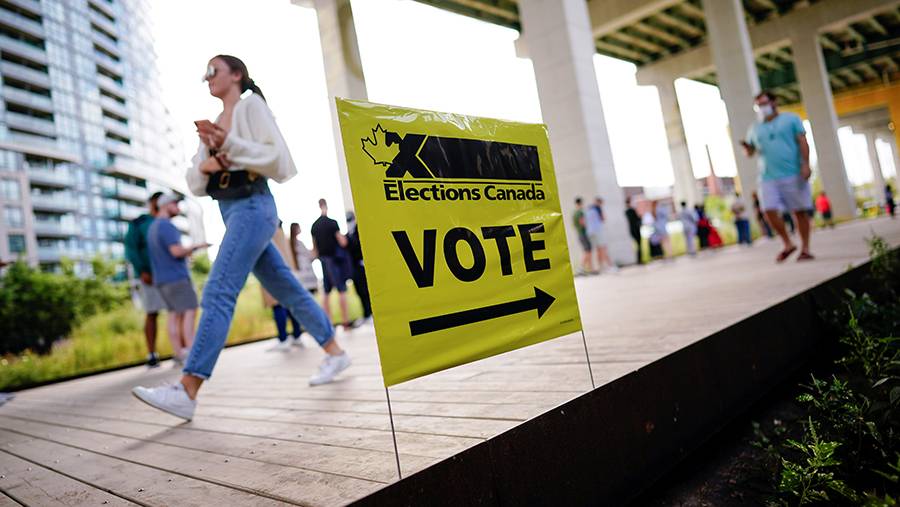
In 2025, Elections Canada will implement a series of changes aimed at increasing accessibility and participation in federal elections. Initiatives approved by Parliament in late 2024 will come into effect in preparation for the upcoming election, scheduled for October 2025.

Among the key changes is the expansion of early voting opportunities. Early voting will now be available for 10 days, up from the previous seven, including weekends. This is especially important for residents of remote areas, where polling stations often operate on limited hours.

A new online voter registration system will also be introduced. Citizens will be able to update their information (address, name) through a secure portal integrated with tax and passport agency databases. This will reduce errors and improve the accuracy of the voter lists.

Accessibility at polling stations has been improved for people with disabilities: all polling stations in cities with populations over 50,000 must be equipped with ramps, tactile markings, and voice-activated voting machines.

Pages: 1 2

Advertising

In February 2025, the Government of Canada released an updated version of the “Nation to Nation Strategy,” aimed at strengthening partnerships with First Nations, Inuit, and Métis peoples. Developed in consultation with Indigenous community representatives, the document focuses on self-governance, land rights, and social equity.

One of the key elements of the strategy is a commitment to finalize all outstanding land claims agreements by 2030. To date, more than 100 modern agreements have been signed, but approximately 150 remain under negotiation, particularly in British Columbia and the Northwest Territories.

The government has also allocated $1.2 billion to support self-government institutions. These funds will be used to establish local health, education, and justice authorities governed by the communities themselves. Agreements have already been signed with 12 communities in Alberta and Saskatchewan. Particular attention is paid to language revitalization. The strategy will expand access to Indigenous language programs in schools and universities, and create a digital archive of oral traditions. According to Statistics Canada, less than 15% of Indigenous people speak their native languages ​​fluently.

Social indicators are also a key focus. Despite progress, poverty, infant mortality, and unemployment rates in Indigenous communities remain above the national average. The new strategy includes targeted investments in housing, clean water, and health infrastructure.

Pages: 1 2

Advertising

In early 2025, the House of Commons of Canada began considering Bill C-47, which aims to modernize citizens’ rights in the digital space. The initiative, developed by the Ministry of Innovation, Science, and Industry, proposes introducing new regulations regarding data privacy, algorithmic transparency, and the right to digital self-determination.

The bill establishes a single federal data protection standard, replacing the outdated Private Sector Personal Information Protection Act (PIPEDA), which has been in effect since 2000. The new regime will require companies to notify users of the purposes for which they collect data, obtain their consent in an understandable manner, and provide access to their digital information upon request.

Particular attention is paid to artificial intelligence. Organizations using automated decision-making systems (for example, in lending or hiring) will be required to explain the data and logic underlying their algorithms. This provision was developed in accordance with the recommendations of the Government of Canada’s AI Ethics Commission.

Bill C-47 also proposes the creation of an independent body—the Digital Regulator of Canada—with powers to investigate violations, impose fines (up to 5% of a company’s annual revenue), and issue orders. The regulator is expected to begin operations in 2026 if the bill is passed.

Government parties have expressed support for the initiative, but the opposition (represented by the Conservative Party and the Bloc Québécois) has proposed amendments to ease requirements for small businesses and clarify the definition of “sensitive data.” Discussions are ongoing in the Industry and Technology Committee.

Pages: 1 2

Advertising